
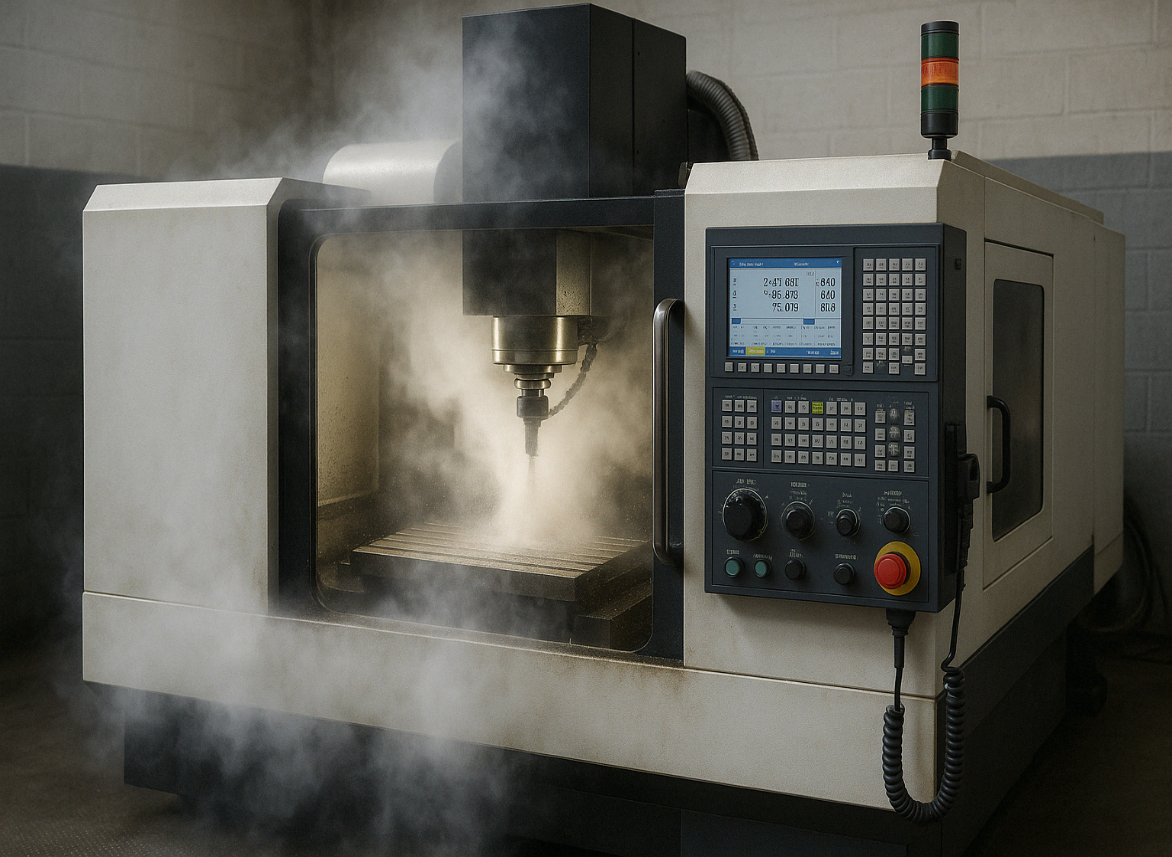
Is CNC Machining Smoke Toxic? Understanding Cutting Fluid pH and Operator Health
In CNC environments, seeing smoke or smelling unusual odors is a major red flag for operators. Common questions often arise: "Is our cutting oil toxic?" or "Did we choose the wrong product?"
While smoke doesn't always equal toxicity, it is a clear indicator of chemical instability. Ignoring these signs can lead to degraded machining precision, machine corrosion, and preventable health risks for your team.
📚 3 Common Causes of Smoke in Cutting Fluids
1. Localized Overheating: Worn tools or improper spindle speeds create excessive friction. This heat causes the fluid to vaporize rapidly.
2. Low Flash Point Volatilization: Some low-quality oil-based fluids have low flash points. At high temperatures, these oils turn into visible mist or smoke.
3. Fluid Degradation & Contamination: When "tramp oils" (slideway or hydraulic oil) mix with your cutting fluid, or when bacteria grow, the chemical stability breaks down. This often leads to a sharp drop in pH, resulting in foul odors and smoke.

🔍 Why pH Balance is the "Heartbeat" of Fluid Safety
The pH level is the most critical indicator of your fluid's health. When the pH is off-balance, the fluid stops protecting your machine and starts risking your operators' health. Even if the fluid's ingredients are non-toxic, an unbalanced pH can still cause long-term respiratory issues and skin allergies for operators.
| Fluid Status | pH Range | Impact on operation&health |
| Optimal | 8.5 – 9.5 | Mildly alkaline. Prevents rust, suppresses bacteria, and stays stable. |
| Too High | > 10.0 | Risk: Causes skin irritation, eye stings, and chemical dermatitis. |
| Too Low | < 8.0 | Risk: Indicates spoilage. Causes foul "Monday Morning Odor" and machine corrosion. |
🔍 4 Steps to Minimize Health Risks
Smoke might not be "poisonous" in the traditional sense, but it is a symptom of a failing system. True workshop safety and high-quality output require consistent monitoring and the right chemical partner.
- Weekly pH & Concentration Monitoring: Use pH strips and a refractometer weekly. If the pH drops below 8.5, it’s time for an adjustment or a full fluid change.
- Review Safety Data Sheets: Look for "Hazard Identification" to understand the specific risks of the chemicals you are using.
- Optimize Ventilation: Install high-efficiency mist collectors. Maintaining negative pressure in the machining area ensures that even invisible vapors are filtered out.
- Professional Fluid Selection: Choosing high-stability, "low-mist" formulations can significantly reduce smoke production at the source.
Are you dealing with persistent smoke or foul odors?
Don't wait for health issues or machine downtime to escalate. At HLJH, we don't just sell oil; we help our partners optimize their entire operation. By understanding your leads, we provide the right technical support at the right time. Let our experts provide a clear diagnosis.
🚨 Yes, my production line needs help now!
If you are facing smoke, odors, or machine downtime, our technical experts will prioritize your case. Or contact us +886-25332210
🔍 No, I'm just researching solutions.
Explore our professional database to learn how to prolong machine life and maintain fluid stability.
- Articles
When your coolant tank starts foaming like a freshly whipped cappuccino and the factory is filled with a pungent oil odor, it’s often a clear sign that the cutting fluid concentration is out of control....
Read more